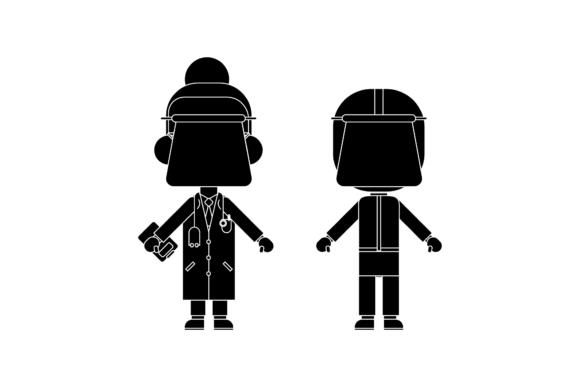
Nurse and Doctor Design: A Practical Embroidery Review
As a designer who spends half my life digitizing files and the other half testing them on actual fabric, I have learned that a pretty picture on a screen does not always translate to a quality embroidery project. When I first pulled up the Nurse and Doctor file, my immediate reaction was one of cautious optimism. This is not just another generic clip art upload; it is a vector-based illustration that promises flexibility for those of us running small craft businesses or fulfilling custom orders for healthcare professionals.
The product description labels this under Illustrations and Graphics, available in AI, EPS, SVG, JPG, and Transparent PNG formats. For an embroidery specialist, this mix of formats tells a specific story. It means we are likely looking at a design intended for both digital printing and machine adaptation, rather than a pre-digitized DST or PES file ready to drop into your machine. This distinction is crucial for setting realistic expectations before you commit to stitching.
First Impressions and Visual Personality
The mood of Nurse and Doctor is professional yet approachable. The lines are clean, suggesting a modern aesthetic that fits well with current trends in medical apparel. Unlike overly cartoonish designs that can look childish on a serious nurse’s scrub cap, this design maintains a balance between friendliness and respect for the profession. The layout appears open, which is a significant advantage when considering stitch flow. Closed shapes and dense clusters are the enemies of good embroidery, so seeing clear separation in the vector preview is a positive sign.
For those of us who create handmade products, visual clarity is everything. If the details are too tight, they will bunch up. If they are too sparse, the fabric will show through awkwardly. The canvas size of 1980 by 1280 pixels provides a high-resolution reference, allowing us to zoom in and inspect the integrity of the lines before we even think about hoop selection.
Real-World Application: The Custom Tote Bag Test
To truly evaluate a design, you must imagine it on a physical object. Let’s consider a common request I receive: a personalized tote bag for a nursing student graduation gift. Using the Nurse and Doctor graphic here requires some technical translation. Since the file is provided as a vector (AI/EPS/SVG), I would import it into my digitizing software to create a proper machine embroidery design.
In this scenario, the design’s simplicity works in our favor. A tote bag made of canvas has a distinct fabric texture that can swallow fine details. By converting the vector paths into satin stitches for the outlines and fill stitches for larger areas, we can ensure the image pops against the textured background. The transparent PNG option is also invaluable here for creating a printable mockup to show the client before any thread is cut. This step builds trust and ensures the customer understands how the final finished product will look.
Versatility Across Product Lines
Beyond tote bags, this design has strong potential for various custom apparel items. For a sweatshirt embroidery project, the scale can be increased significantly. The bold nature of the illustration means it can handle the puff of a fleece garment without losing its identity. However, for smaller items like a baby embroidery onesie or a pocket patch, caution is required. The intricate parts of the doctor’s coat or the nurse’s cap might need simplification. Reducing a complex vector too much results in a muddy mess of thread.
If you are an Etsy seller focusing on holiday embroidery gifts, such as Christmas ornaments for hospital staff, this design could be adapted into an applique design. By using felt or cotton fabric for the main shapes and only stitching the outlines, you reduce the stitch density and prevent the ornament from becoming stiff and heavy. This technique also speeds up production time, a critical factor for small shop owners during peak seasons.
Technical Considerations and Potential Pitfalls
While the aesthetic appeal is high, there are practical challenges to address. Because this is sold as a graphic asset rather than a pre-digitized embroidery file, the burden of technical execution falls on you. You must determine the appropriate hoop size and stitch types. A common mistake is assuming a vector line equals a single run of thread. In reality, you need to decide between a running stitch for delicate details or a satin stitch for definition.
Consider the fabric type. If you are stitching on a stretchy scrub top, proper stabilization is non-negotiable. Without a cut-away stabilizer, the tension from the embroidery will cause the fabric to pucker, distorting the Nurse and Doctor image. Additionally, thread colors play a massive role in readability. On dark navy scrubs, you cannot rely on subtle shading. You need high-contrast thread choices to ensure the design remains visible from a distance.
Another area of concern is curved surfaces, such as caps. Embroidering on a curved brim requires careful placement. If the design is too wide, it will wrap around the curve and become distorted. Always test the design on scrap fabric of the same type and weight as your final product. This "proof of concept" step saves costly materials and protects your reputation as a professional creator.
Commercial Use and Brand Consistency
For creative entrepreneurs, the licensing aspect is paramount. The description states the design is easy to edit, which is excellent for brand consistency. If you run a boutique specializing in medical gifts, you can tweak the colors to match your shop’s palette. However, always confirm the specific license terms for commercial use. Selling physical items like embroidered patches is generally different from selling the digital file itself. Ensure you understand these boundaries to avoid legal issues down the line.
Using high-quality design assets like this elevates your perceived value. Customers can tell the difference between a pixelated, poorly stitched image and a crisp, well-executed design. When you deliver a personalized gift that looks professional, you encourage repeat business and positive reviews. The Nurse and Doctor illustration, when handled with technical skill, serves as a strong foundation for building that reputation.
Final Verdict for Makers
The Nurse and Doctor graphic is a versatile tool for the modern maker. It bridges the gap between digital illustration and tactile craft. Its success depends entirely on the user’s ability to translate vector lines into efficient stitch paths. It is not a plug-and-play solution for beginners who lack digitizing skills, but for experienced designers, it offers a solid base for creating high-value items.
Whether you are creating a tote bag design for a local hospital fundraiser or a set of embroidered patch logos for a clinic’s uniform update, this file provides the necessary clarity and style. Just remember to respect the limitations of your machine and fabric. Test your tension, choose your stabilizer wisely, and let the clean lines of the original vector guide your stitch placement. With careful attention to detail, this design can become a staple in your portfolio of commercial embroidery offerings.